Insert Moulding
Insert Moulding for Industrial Components
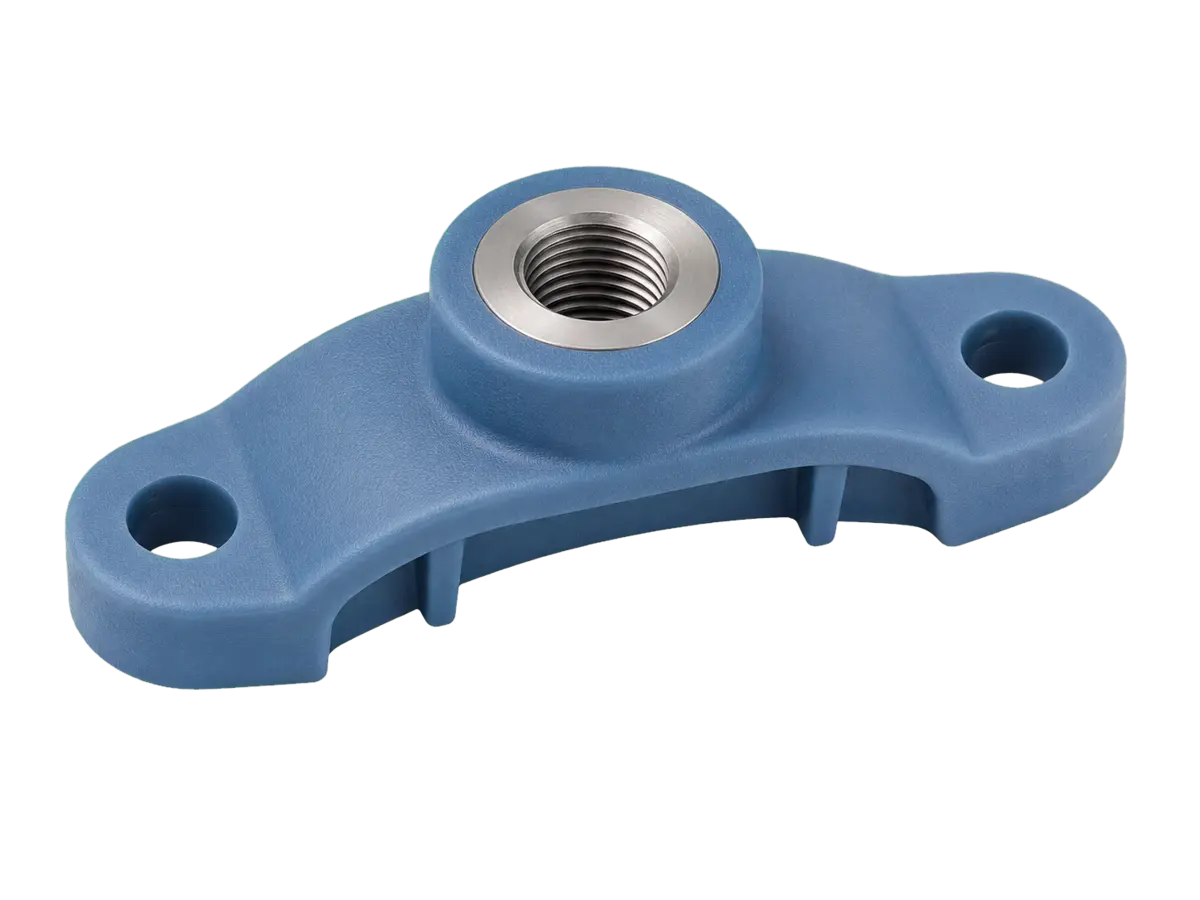
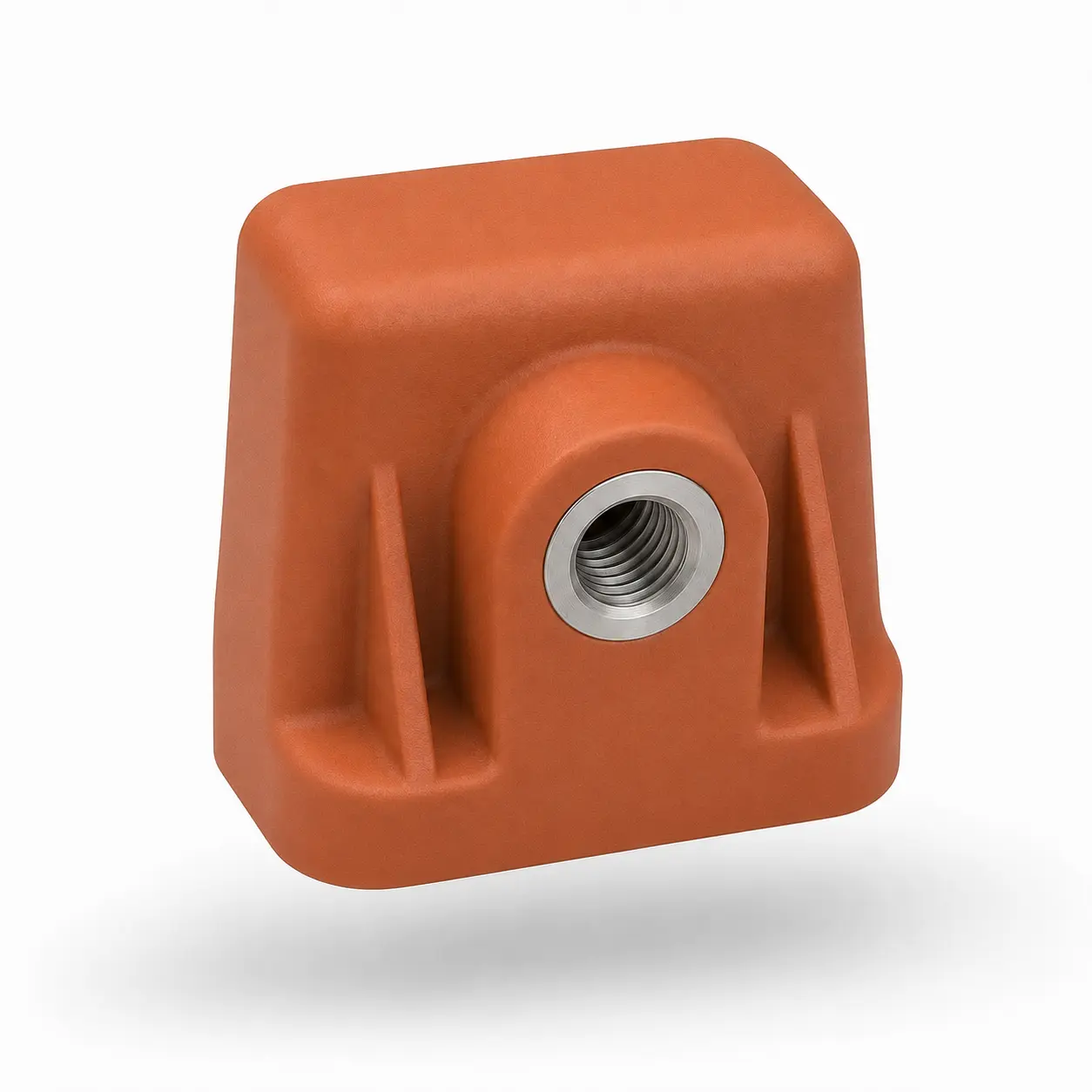
Metal inserts such as threaded bushes, sleeves, pins and electrical contacts are positioned in the mould before the plastic is injected. The moulded material forms the component around the insert, integrating both materials in one production cycle.
Insert geometry, positioning, material compatibility and surrounding wall thickness are reviewed to control retention, alignment and moulding stresses. Where suitable, the process can reduce secondary assembly operations and part count.
Typical Insert-Moulded Parts
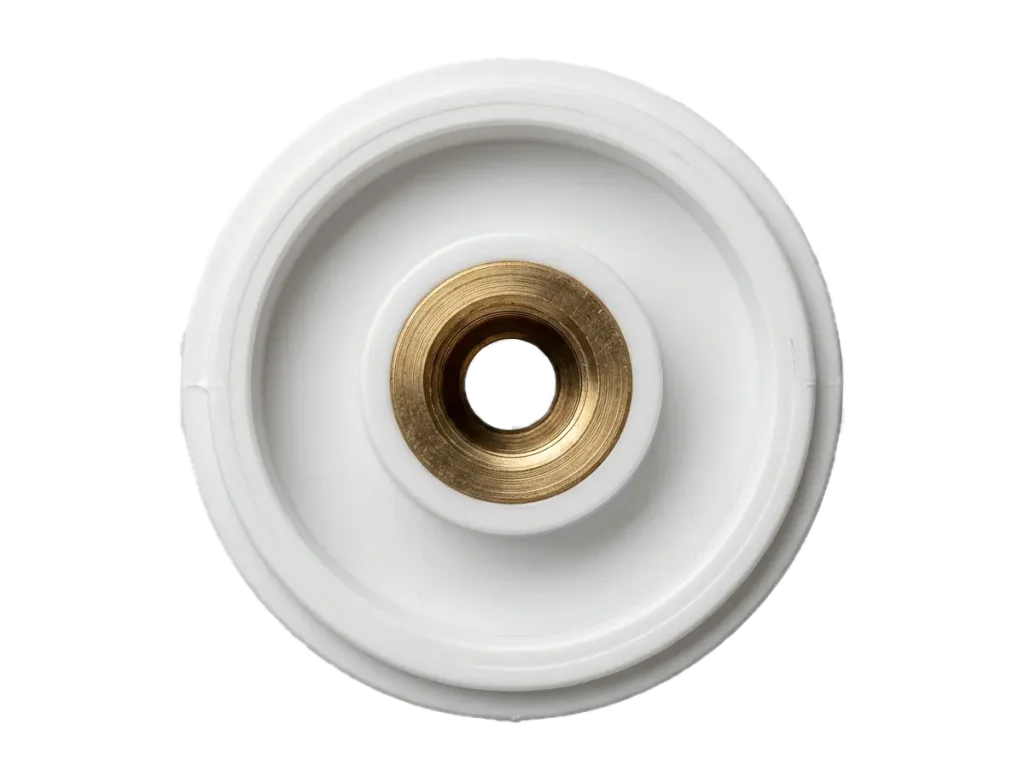
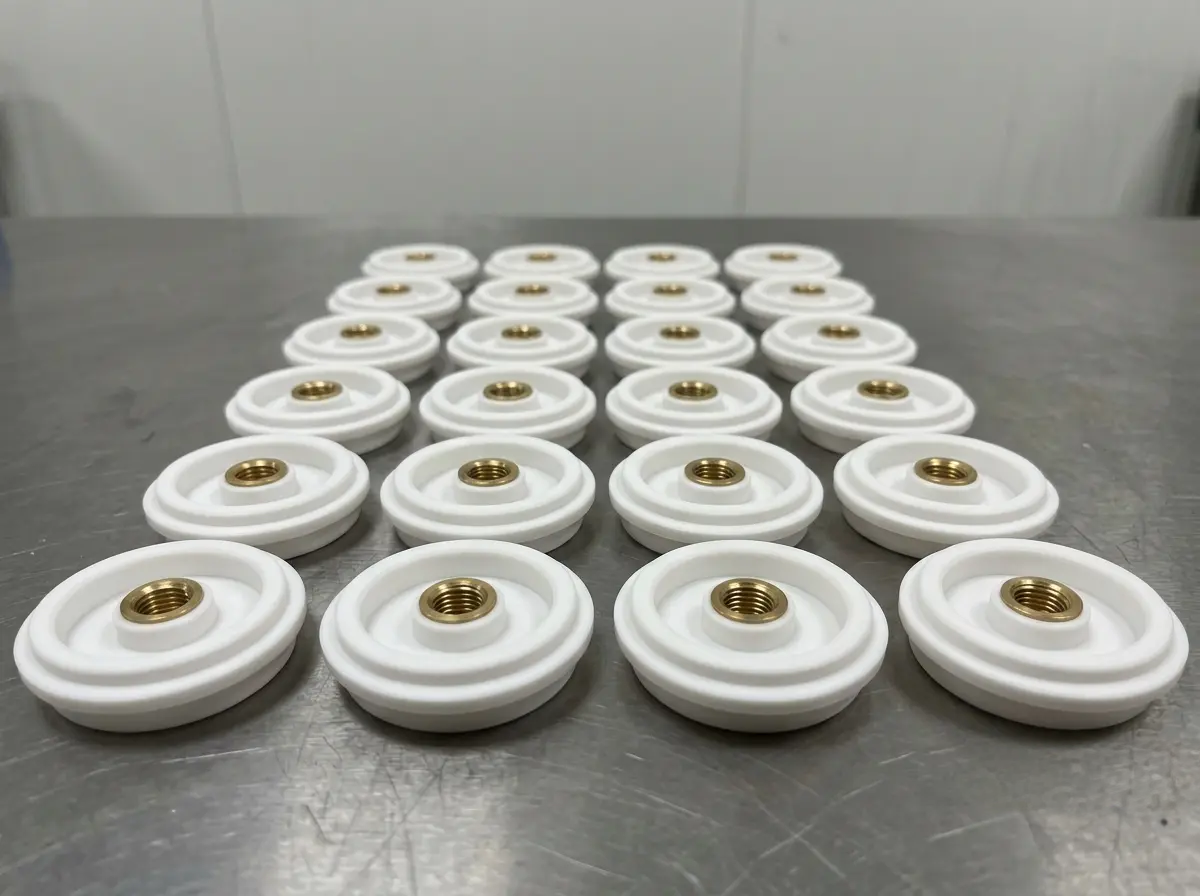
These examples represent common components in which metal inserts provide threads, bearing surfaces, electrical contact or local reinforcement. Insert geometry, positioning, plastic material and retention requirements are reviewed for each project.
- Threaded Mounting Components
- Bushed Gears, Pulleys and Rollers
- Electrical Connectors and Terminal Housings
- Components with Embedded Pins or Contacts
Materials and Production Options
The moulded resin and insert are evaluated as one system. Material properties, insert geometry, production volume and loading method affect tooling and process setup. Stepstone coordinates insert supply, tooling, sampling and production through its manufacturing network.
Common Materials for Insert Moulding
Unfilled and glass-fibre-reinforced grades are used where strength, stiffness, wear resistance or temperature performance is required. Moisture absorption, moulding shrinkage and the stresses around metal inserts must be considered during material and part design.
ABS is commonly used for rigid housings and general industrial components. PC provides higher impact and temperature resistance, while PC-ABS combines impact performance with easier processing. The final grade is selected according to load, operating temperature and dimensional requirements.
POM provides low friction, wear resistance and dimensional stability for gears, rollers, guides and moving components. Because the material does not naturally bond well to metal, the insert normally requires grooves, knurls or other mechanical retention features.
PP and HDPE are used where low density, chemical resistance or moisture resistance is required. Their shrinkage, flexibility and limited adhesion to metal make insert geometry, surrounding wall thickness and mechanical retention important design factors.
Common insert materials include brass, stainless steel and carbon steel. Threaded inserts, bushes, sleeves, pins and electrical contacts are selected according to mechanical load, corrosion exposure, conductivity and functional requirements.
Tooling And Process Requirements
Tooling and Mould Preparation
The mould is designed with dedicated features to locate, support and seal each insert during injection. Gating, venting, wall thickness and ejection are reviewed to reduce insert movement, air traps and local moulding stresses.
Existing tooling is reviewed for cavity condition, insert location and support, gating, venting and machine compatibility. Modification is considered only where the mould can maintain insert position and protect threads, holes and sealing surfaces.
Knurls, grooves, flats, undercuts or cross-holes can provide resistance to pull-out or rotation. Their geometry must provide sufficient retention without creating sharp transitions or excessive stress in the surrounding plastic.
Insert dimensions, tolerances, surface condition and orientation must remain consistent between production batches. Cleaning, inspection or preheating may be specified according to the insert material, moulded resin and process requirements.
Insert Loading and Production Requirements
The insert must be located and supported so that it remains in the required position during moulding. The locating method is defined according to insert geometry and dimensional requirements.
Insert orientation, handling requirements and production volume are reviewed when determining the loading method. Manual loading is generally suitable for lower volumes and parts with different insert variants.
Quality and Inspection Coordination
Stepstone coordinates insert moulding projects from the review of insert and polymer requirements through tooling, sampling, production, inspection and shipment. Quality and documentation requirements are aligned with insert position, retention, material specifications, critical dimensions and the acceptance criteria agreed for each project.
Pre-Production Quality Review
- Technical drawings, 3D data and revision status
- Polymer and insert material specifications
- Insert position, retention features and critical dimensional requirements
- Sampling, inspection scope and acceptance criteria
Project and Manufacturing Coordination
- Mould trial and sample approval status
- Quotation and production follow-up
- Project-specific inspection and documentation requirements
- Shipment coordination through a single point of contact
A Smarter Approach To Manufacturing Projects
Broad Manufacturing Expertise
Through a carefully selected network of manufacturing specialists, we deliver the capabilities needed for complex industrial projects—from individual components to fully integrated production solutions.
One Partner For Every Manufacturing Need
From engineering review and supplier selection to production, quality assurance, and logistics, we manage the entire manufacturing process through a single point of contact.
Built Around Reliability
Every project is managed with a focus on quality, transparency, and delivery performance. From the first inquiry to final shipment, we take responsibility for keeping production under control.
What To Include In Your RFQ
To evaluate your insert moulding project efficiently, please provide the available technical, tooling and commercial information with your request. Clear documentation helps us review insert specifications, mould requirements, production planning, inspection scope and project timing.
Technical Drawings And 3D Models
Provide available 2D drawings and 3D CAD files for the finished component and each insert, including dimensions, tolerances and revision status. Insert position and orientation should be clearly identified.
Material And Colour Requirements
Specify the polymer type, grade and colour, together with the insert material, finish or coating. Include any operating conditions or compliance requirements that affect material selection.
Quantities And Delivery Schedule
Include initial sample quantities, order quantities, annual demand and target delivery dates. Volume information influences cavity count, mould construction, production planning and quotation scope.
Part And Surface Requirements
Identify critical dimensions, insert locations and orientation, thread or through-hole requirements, functional interfaces, cosmetic surfaces and permitted visual limits. Include any secondary finishing or assembly requirements.
Tooling Status And Requirements
Indicate whether a new mould is required or an existing customer-owned mould will be used. For existing tooling, provide drawings, dimensions, cavity count, machine interface details and condition records.
Quality And Sample Approval Requirements
Define sample approval, inspection reports, material certificates, traceability, capability studies or other acceptance criteria. These requirements should be agreed before mould approval and production release.
Discuss Your Insert Moulding Project
Share your drawings, moulded material, insert specifications, tooling information and production requirements to begin a technical review. Stepstone reviews the available documentation and coordinates quotation, mould trials, production, inspection and delivery.
Sheet Metal Assemblies
Bending Services