Sheet Metal Fabrication Services
A Smarter Approach To Manufacturing Projects
Broad Manufacturing Expertise
Through a carefully selected network of manufacturing specialists, we deliver the capabilities needed for complex industrial projects—from individual components to fully integrated production solutions.
One Partner For Every Manufacturing Need
From engineering review and supplier selection to production, quality assurance, and logistics, we manage the entire manufacturing process through a single point of contact.
Built Around Reliability
Every project is managed with a focus on quality, transparency, and delivery performance. From the first inquiry to final shipment, we take responsibility for keeping production under control.
Sheet Metal Fabrication Through A Manufacturing Integration Partner
Stepstone coordinates sheet metal fabrication projects through a trusted manufacturing network, helping industrial buyers manage cutting, forming, bending, punching, welding, assembly and quality control through a single point of contact.
From simple cut parts to fabricated assemblies, we support each project with supplier selection, production follow-up, inspection and shipment coordination to reduce sourcing complexity and improve project control.
Sheet Metal Fabrication
Stepstone offers a streamlined approach to sheet metal manufacturing. Simply send us your drawings and our team will review your requirements and provide a fast quotation.
From laser cutting and bending to welding and assembly, we coordinate the entire process to ensure quality, efficiency, and dependable delivery.
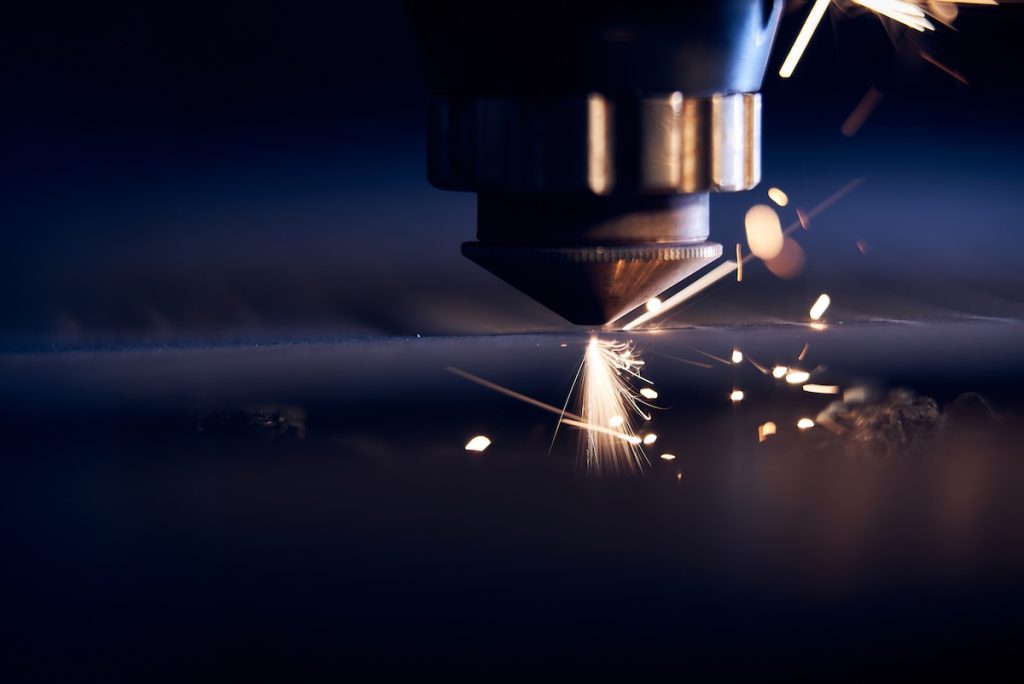
Laser cutting is a highly accurate sheet metal manufacturing process used to produce flat components with complex geometries and tight tolerances. A computer-controlled laser beam precisely cuts the material according to the digital design, enabling efficient production without the need for dedicated tooling.
The process is suitable for a wide range of metals and is commonly used for brackets, enclosures, mounting plates, panels, and other precision sheet metal parts. Thanks to its high accuracy and clean cutting edges, additional finishing operations are often minimized. Laser cutting is an economical solution for both prototypes and production volumes, offering fast turnaround times, excellent repeatability, and consistent part quality.
Plasma cutting is a reliable and cost-effective sheet metal processing method used for the rapid production of components from electrically conductive materials. By utilizing a high-temperature plasma arc, the process can efficiently cut through a wide range of metals while maintaining good dimensional accuracy and productivity.
The technology is particularly well suited for thicker materials where cutting speed and economic efficiency are key considerations. Carbon steel, stainless steel, aluminum, and many other conductive metals can be processed, making plasma cutting a versatile solution for both standard production and custom fabrication projects. Its combination of flexibility, performance, and cost-effectiveness makes it an attractive option for prototypes, low-volume orders, and large-scale manufacturing alike.
Waterjet cutting is a highly versatile manufacturing process used to produce precise components from a wide range of materials. By combining a high-pressure water stream with abrasive particles, the process can cut metals and other materials accurately while preserving their original material properties.
Because waterjet cutting is a cold-cutting process, no heat-affected zone is created during machining. This eliminates the risk of thermal distortion, material hardening, or microstructural changes, making the technology particularly suitable for heat-sensitive materials and complex geometries. The process also delivers clean cut edges, often reducing or eliminating the need for secondary finishing operations.
Waterjet cutting is well suited for prototypes, custom parts, and low- to medium-volume production runs where material integrity and dimensional accuracy are critical. Its ability to process a wide variety of materials with high precision makes it an effective solution for demanding industrial applications.
Sheet metal forming and bending are essential manufacturing processes used to transform flat metal sheets into precise three-dimensional components. Through controlled deformation using CNC press brakes, forming tools, and rolling equipment, a wide range of geometries can be produced, including flanges, channels, enclosures, brackets, curved sections, and complex structural parts.
These processes offer excellent dimensional accuracy, repeatability, and flexibility across various materials and sheet thicknesses. Whether creating sharp bends, defined angles, or large-radius profiles, modern forming and bending technologies enable efficient production while maintaining material integrity and consistent quality.
Suitable for prototypes, custom fabrication, and serial production, sheet metal forming and bending are widely applied in industries ranging from machinery and industrial equipment to transportation, energy, and architectural systems.
Sheet metal punching is an efficient manufacturing method used to create holes, slots, openings, and repeating geometries on sheet metal using punches and dies. CNC-controlled machines enable the production of features of various shapes and sizes with high speed and repeatability.
The method is particularly suitable for parts containing ventilation openings, connection holes, mounting slots, and regular hole patterns. Suitable for both prototypes and mass production, the punching process provides fast cycle times and economical production in appropriate part geometries.
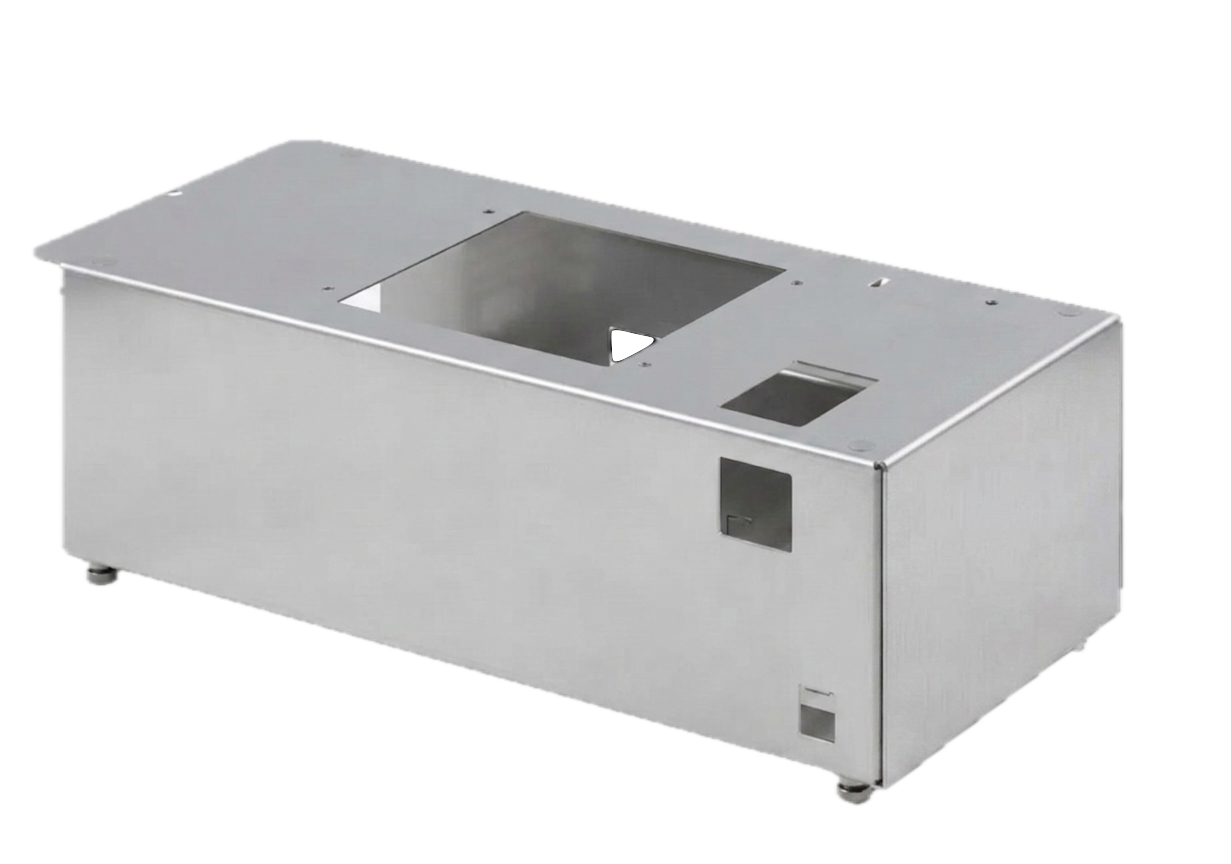
Welded and assembled part manufacturing combines cutting, bending, welding, joining, and assembly processes to create finished metal parts and structures. The combination of advanced manufacturing equipment and expert workmanship ensures the precise and consistent production of components with diverse geometries.
Depending on project requirements, the process may include laser cutting, drilling, bending, welding, mechanical machining, fastener application, and final assembly. This allows for the delivery of ready-to-use parts and subassemblies, ranging from individual parts to complex multi-component systems.
Integrating multiple manufacturing and finishing capabilities into a single coordinated workflow helps maintain dimensional accuracy, structural strength, and repeatable quality throughout all production phases.
Surface Treatment Process
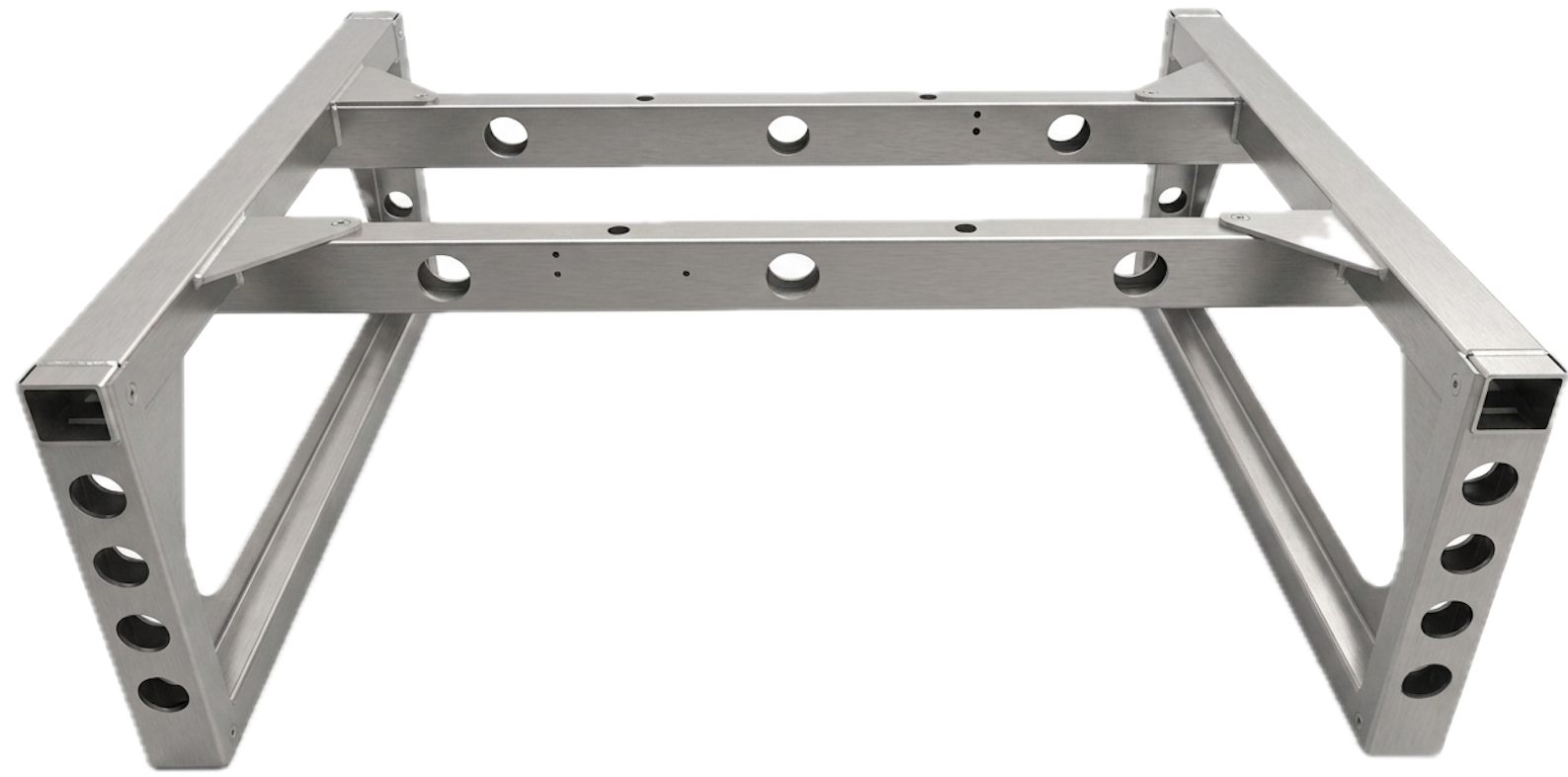
Sheet metal processing involves precise cutting, forming, and subsequent surface finishing to achieve both functional performance and long-term durability. An appropriate surface treatment is a key factor in protecting components against corrosion, improving mechanical resistance, and ensuring a consistent, high-quality appearance.
Depending on the application, processes such as powder coating, anodizing, or galvanizing are applied to meet specific technical and environmental requirements.
Surface Treatments
- Powder coating
- Galvanizing (zinc plating)
- Nickel plating
- Anodizing
- Black Oxide
- Passivating
- Marking
- Deburring
Materials for Sheet Metal Fabrication
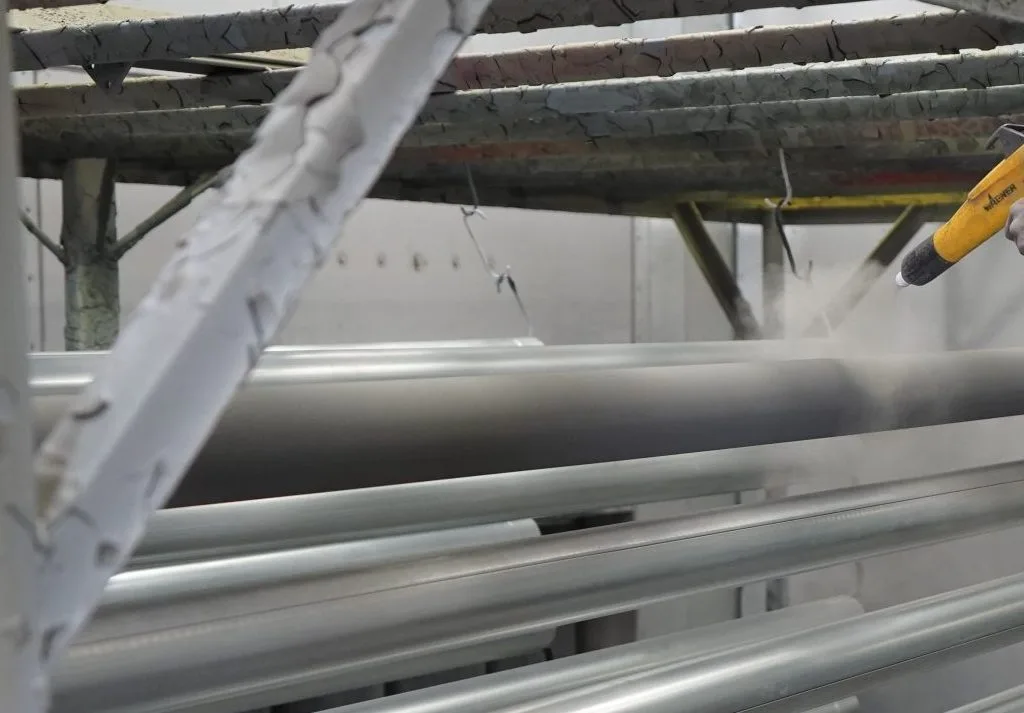
Material selection is a key factor in professional sheet metal processing, directly influencing strength, formability, surface quality, and overall component performance. Depending on the project, each material is selected to achieve optimal manufacturability and consistent part quality.
With reliable material availability throughout the entire production process, we support both prototype development and series manufacturing, ensuring stable quality, repeatability, and functional performance across all stages of sheet metal production.
The most commonly used materials
Aluminum is one of the most popular materials in sheet metal fabrication due to its excellent combination of low weight, corrosion resistance, and formability. Its favorable mechanical properties make it suitable for a wide range of industrial applications where both strength and weight reduction are important.
The material can be cut, formed, and bent with high precision, making it ideal for demanding design requirements. Aluminum also offers an attractive surface appearance and consistent processing characteristics, making it a reliable choice for both prototype development and serial production
Stainless steel is one of the most widely used materials in sheet metal fabrication thanks to its excellent corrosion resistance, mechanical strength, and long-term durability. It is an ideal choice for components exposed to moisture, chemicals, or demanding operating environments while maintaining an attractive surface finish.
Sheet metal fabrication typically involves precision cutting, bending, forming, welding, and assembly to produce high-quality functional components. The material retains its mechanical properties throughout the fabrication process, allowing complex geometries to be manufactured with excellent dimensional accuracy. Stainless steel is commonly used for enclosures, brackets, cabinets, frames, tanks, food-processing equipment, and industrial machinery components.
Mild steel is one of the most widely used materials in sheet metal fabrication due to its excellent formability, weldability, and cost-effectiveness. Its low carbon content makes it easy to cut, bend, roll, and weld without the risk of excessive brittleness or cracking, making it suitable for a wide variety of industrial applications.
Although it has lower corrosion resistance than stainless steel, it readily accepts protective surface treatments such as galvanizing, zinc plating, powder coating, and painting. This combination of manufacturing flexibility, mechanical reliability, and economical production makes low carbon steel an ideal material.
Plastic sheet materials provide an excellent combination of lightweight construction, durability, and design flexibility. Available in a wide range of engineering grades, they offer properties such as chemical resistance, electrical insulation, impact strength, and dimensional stability, making them suitable for both functional and technical applications.
Plastic sheets can be accurately cut, machined, and fabricated into custom components with excellent repeatability and cost efficiency. Fabricated plastic parts are widely used in medical devices, food processing equipment, electrical and electronic systems, automotive applications, and industrial machinery where corrosion resistance, low maintenance, and reliable performance are essential.
Brass is a copper-zinc alloy valued for its excellent corrosion resistance, good formability, and attractive gold-like appearance. It offers a well-balanced combination of strength and workability, making it suitable for both functional and decorative sheet metal applications. Compared to aluminum, brass has a higher density, providing greater rigidity and a premium finish where appearance is an important consideration.
In sheet metal fabrication, brass can be accurately cut, formed, and bent while maintaining good dimensional stability and surface quality. It is commonly used for architectural components, electrical parts, fittings, decorative panels, and precision industrial applications where durability, corrosion resistance, and aesthetics are equally important.
Copper is a highly versatile engineering material valued for its outstanding electrical and thermal conductivity, excellent corrosion resistance, and superior formability. These properties make it an ideal choice for applications where efficient energy transfer, heat dissipation, and long-term reliability are essential.
It is widely used in electrical equipment, busbars, heat exchangers, shielding components, and energy systems. Its combination of conductivity, durability and manufacturing flexibility makes copper suitable for electrical, thermal and industrial sheet metal applications.
Why Partner With Stepstone
Fast and Predictable Lead Times
We accelerate sheet metal fabrication from quotation to production with efficient process coordination. Flexible manufacturing and logistics planning help ensure stable and on-time delivery performance.
Design for Manufacturability in Sheet Metal
Your CAD drawings are reviewed specifically for sheet metal processes such as laser cutting, bending, punching, and welding. Early engineering feedback helps optimize geometry, reduce production risks, and improve manufacturability.
Scalable Fabrication without MOQ Limits
Whether it is a single prototype bracket or large-scale sheet metal assemblies, production is fully scalable without minimum order quantity restrictions, allowing maximum flexibility for your project needs.
Integrated Sheet Metal Manufacturing Network
We combine laser cutting, punching, bending, welding, and assembly within a single coordinated manufacturing system, enabling complete sheet metal components and assemblies from one source.